Small Home Lift Options and Prices: 2026 Guide
Five space-saving home lifts from Direct Lifts compared, with the space each one needs, who it suits and what affects the price.
By Christian SanbyUpdated November 20266 min read
In this guide
Stairs get harder over time, and in a smaller home there is rarely room for a full-size lift. That is where a small-footprint home lift comes in.
Today’s small home lifts need far less space and building work than they did a few years ago. Many need no lift shaft, no pit and no machine room, so they can go into an existing home with minimal fuss.
This guide covers the small-footprint home lifts that Direct Lifts supplies and installs across Australia. We compare five models from our own range, with the space each one needs, who it suits and what affects the price.
How much space does a small home lift need?
The smallest models in this guide need a circle just 750 mm across. Larger, wheelchair-friendly models need a footprint of around 1.1 x 1.4 m.
Most small home lifts sit on your existing floor or need only a shallow recess. Some fit against a wall or into a corner, which makes them ideal for townhouses and older homes.
Before you choose, check three things:
- Floor space: the footprint of the lift plus room to step or roll in
- Ceiling height: each model has a minimum height on the lower and upper floors
- Travel: how far the lift needs to go, and how many floors it needs to stop at
Features to look for
A good home lift should make every trip feel safe and simple. Look for:
- Emergency lowering or battery backup if the power goes out
- An alarm button and emergency phone or auto dialler
- Safety sensors on the gate, platform and drive
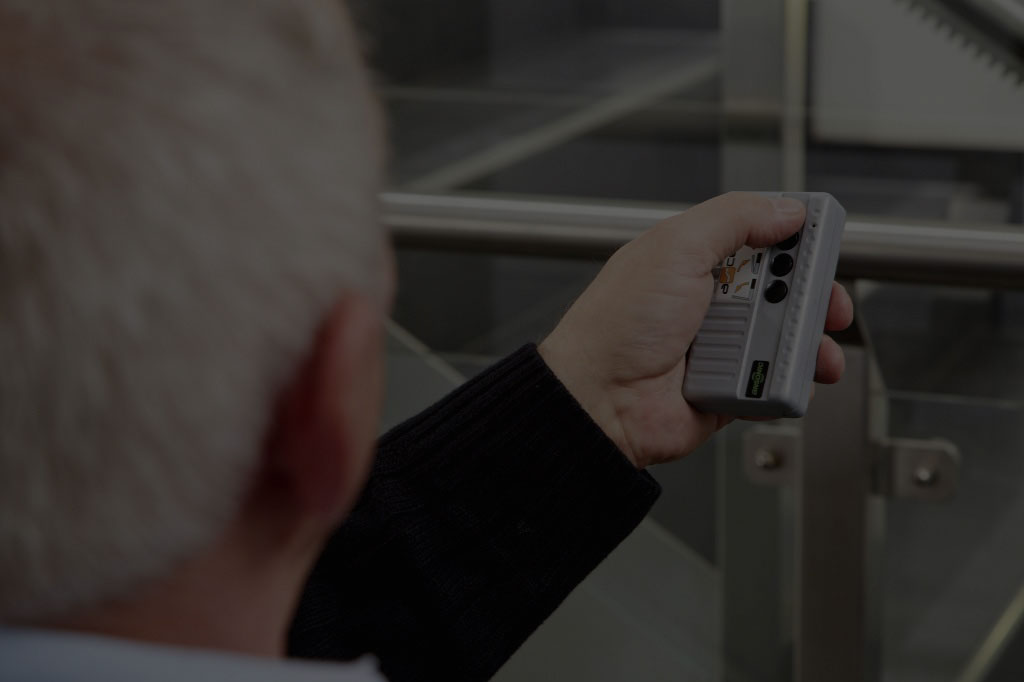
- Simple up and down controls, plus remote calls from each floor
- A fold-down seat for users who need to sit
Also check that the lift meets the Australian low-rise lift standard, AS 1735.15.
Benefits and limits of a small home lift
A small home lift brings real benefits:
- Safer access between floors, with less risk of falls on the stairs
- Stay in the home you love for longer
- Little or no structural work, which keeps building costs down
- Quick installation on some models, with the Cube usually installed in 2 to 3 days
- A modern feature that can add value when you sell
There are also a few things to keep in mind:
- Some models, such as the Air 30, Cube and SmartFit 100, carry only one or two people
- Travel height is limited on some models, so check how many floors you need
- Only some models fit a wheelchair: the SmartFit 120, Air 52 and NeoLift L and XL
Five Space-Saving Home Lifts from Direct Lifts
Every model below is part of our current home lifts range. Our team will check your space and recommend the right fit.
1. Air Vacuum Lift
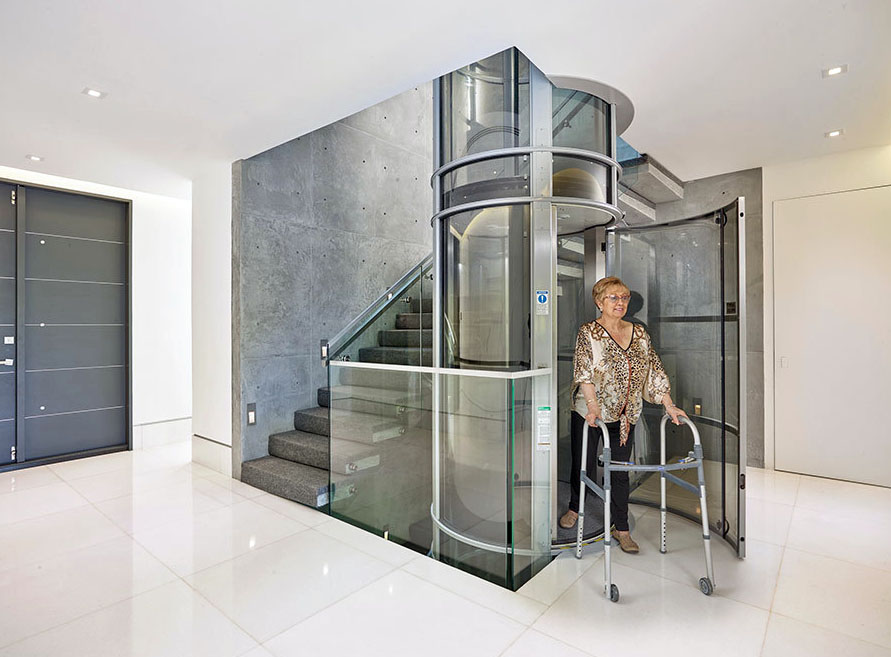
The Air vacuum lift moves by changing the air pressure above the cabin. There is no pit, no conventional shaft and no machine room.
It comes in three sizes. The Air 30 needs a circle just 750 mm across, while the Air 52 takes a wheelchair. See how the Air 30 fit into a tight space in our Merimbula project.
| Footprint | 750, 950 or 1338 mm diameter |
|---|---|
| Capacity | 1 to 3 people (159 to 238 kg) |
| Stops and travel | 2 to 5 stops, up to 15 m |
| Pit | None |
2. Cube
The Cube uses an air-driven system in a square cabin. Its outside size is just 914 x 914 mm.
It rests on the ground floor with no pit, and installation usually takes 2 to 3 days. View a real install on our Cube project page.
| Footprint | 914 x 914 mm |
|---|---|
| Capacity | 2 people (204 kg) |
| Stops and travel | Up to 3 stops, up to 10.67 m |
| Pit | None |
3. SmartFit 100
The SmartFit 100 needs no lift shaft and no pit. The platform is only 65 mm thick, so it sits on your existing floor.
It moves 2 people between 2 floors, with clear acrylic side walls and two remote controls as standard.
| Footprint | 1046 x 731 mm |
|---|---|
| Capacity | 2 people (170 kg) |
| Stops and travel | 2 stops, 2.4 to 3 m |
| Pit | None, 65 mm platform |
4. SmartFit 120
The SmartFit 120 gives you wheelchair access without building a lift shaft. A built-in ramp on its 56 mm platform makes rolling on easy.
It carries 3 people or a wheelchair user plus a companion, with an 850 mm wide door.
| Footprint | 1076 x 1431 mm |
|---|---|
| Capacity | 3 people (250 kg) |
| Stops and travel | 2 stops, 2.4 to 3 m |
| Wheelchair | Yes, with built-in ramp |
5. NeoLift
The NeoLift is a screw-driven cabin lift that comes with its features included. Automatic doors, a mirror ceiling, a fold-down seat and handrail controls are all standard.
It comes in four cabin sizes, which makes it a flexible choice for two-storey homes.
| Cabin sizes | S 600 x 700 mm to XL 1250 x 850 mm |
|---|---|
| Capacity | 1 to 3 people |
| Wheelchair | L and XL sizes |
| Included | Automatic doors, fold-down seat |
Side-by-side comparison
| Model | Footprint (mm) | Capacity | Stops | Max travel | Wheelchair |
|---|---|---|---|---|---|
| Air 30 / 37 / 52 | 750 / 950 / 1338 diameter | 1 to 3 people | 2 to 5 | 15 m | Air 52 only |
| Cube | 914 x 914 | 2 people | Up to 3 | 10.67 m | No |
| SmartFit 100 | 1046 x 731 | 2 people | 2 | 3 m | No |
| SmartFit 120 | 1076 x 1431 | 3 people | 2 | 3 m | Yes |
| NeoLift | Cabin 600 x 700 to 1250 x 850 | 1 to 3 people | Ask us | Ask us | L and XL |
Specs from each product page. They may vary with site conditions, and our team will confirm every detail in your quote.
What affects the price of a small home lift?
Every home is different, so the price of a small home lift depends on your space and your needs. The main factors are:
- Model and size: a larger cabin or wheelchair model costs more
- Number of stops and travel height: each extra floor adds to the price
- Building work: shaft-free and pit-free models keep this cost low
- Finishes and options: custom colours, seats, auto diallers and door upgrades
- Power supply: some models need a dedicated single phase circuit
For a wider look at costs, read our home lift prices guide. If you need a lift for limited mobility, see our limited mobility lifts.
Small home lift FAQs
How much does a small home lift cost?
The price depends on the model, the number of stops, how much building work your home needs, and the finishes and options you choose. Shaft-free and pit-free models usually keep building costs lower. Get a free quote for an accurate price for your home.
How much space does a small home lift need?
The smallest model in this guide, the Air 30, needs a circle just 750 mm across. The Cube needs 914 x 914 mm, and wheelchair-friendly models need a footprint of around 1.1 x 1.4 m. You also need enough ceiling height on each floor, and our team will check this for you.
Do small home lifts need a pit or a lift shaft?
Many don’t. The Air vacuum lift and the Cube need no pit, and the Air needs no conventional shaft or machine room. That keeps building work to a minimum in an existing home.
Can a small home lift fit a wheelchair?
Yes, if you choose the right model. The SmartFit 120 has room for a wheelchair user and a companion, with a built-in ramp. The Air 52 and the NeoLift L and XL cabin sizes also suit wheelchair users.
How long does it take to install a home lift?
It depends on the model and your home. The Cube usually takes 2 to 3 days to install. Our team will give you a timeline as part of your quote.
Do home lifts in Australia need to meet a standard?
Yes. Low-rise lifts for people with limited mobility are covered by the Australian Standard AS 1735.15. The Air and Cube lifts in this guide are compliant with AS 1735.15. Ask us for the compliance details of any model.
Get a free quote
Not sure which model fits your home? Our team will check your space, talk you through your options and give you a clear price.

A man who knows his way around the world of mobility. He has been in this industry for decades and has seen it all!
He started his career in Brisbane with mobility scooters, and progressed to stairlifts, and ultimately platform lifts. He gained a newfound interest in elevators while working in the lift industry and took advantage of the opportunity to work in both residential and commercial lifts. He is now the official distributor of Nova Elevators Italy, Cibes, Ascendor, Otolift & ThyssenKrupp products in Australia. Offices and showrooms expanded in Brisbane, Sydney & Coffs Harbour while establishing partnerships in major cities such as Melbourne, Northern Territory.
He is a current member of the Lift Engineer’s Society of Australia (LESA), providing advice regarding lift standards, their implementation, good industry practices and compliance with applicable AS standards, guidelines, and codes
Start your project now
Contact our specialists for friendly lift guidance. Tell us a little about your home and we will be in touch to talk through the right model and a clear price.
- Free, no-obligation quote
- Help choosing the right model for your space
- Offices and showrooms in NSW, VIC and QLD